Key Takeaways
- Dopamine is the brain’s system for wanting, anticipation, and pursuit, not for pleasure. The “pleasure molecule” label is a category error: the pleasure of having runs on a different set of brain systems from the drive of wanting.
- This is why reaching a long-chased goal can feel strangely empty. The dopamine was in the pursuit; at the moment of arrival, the prediction it was tracking is fulfilled and the signal collapses: the chase delivered the chemistry, not the trophy.
- “Dopamine detox” is biologically incoherent: dopamine is essential every moment you are alive. What actually works is lowering an over-stimulated threshold so ordinary effort feels rewarding again: recalibration, not abstinence.
- More dopamine is not more happiness. Chronically chasing high-magnitude rewards drags the baseline down, so it takes more to feel the same. A well-regulated system, not a maximized one, is what sustains both motivation and contentment.
There is a sentence repeated so often online that it has hardened into common sense: dopamine is the pleasure molecule. It anchors the wellness podcasts, the productivity threads, every promise of a “dopamine detox,” and every claim that the secret to a better life is simply more of it. It is also, in the way that matters most, wrong. Dopamine is not the chemistry of pleasure. It is the chemistry of wanting, of anticipation, pursuit, and the pull toward what might be next. That distinction sounds academic until you notice how much advice about motivation, focus, and contentment is built on top of the error, and how differently you would approach your own drive once you understand what the molecule is actually doing.
The Pleasure Molecule Was Always the Wrong Name
The cleanest way to see the mistake is an experiment that has been replicated for decades. Reduce dopamine signaling in an animal and it stops working for a reward, it will not cross the cage, press the lever, or spend the effort. But place the reward directly in its mouth and the pleasure reactions are intact. The liking survives; only the wanting collapses. Kent Berridge and his colleagues named this dissociation: dopamine carries incentive salience (the wanting, the seeking, the motivational charge that makes a goal feel worth chasing), while the actual hedonic experience of pleasure runs on a separate set of opioid and endocannabinoid systems in small hotspots of the reward circuitry. Two different jobs, two different chemistries. The popular shorthand collapsed them into one.
What dopamine tracks is closer to prediction than to pleasure. Wolfram Schultz’s work showed that dopamine neurons fire not when a reward arrives, but when a reward arrives that is better than expected, and once the reward becomes predictable, the signal shifts backward in time to the cue that predicts it. Dopamine is a teaching signal about the future. It marks the gap between what you expected and what you got, then points your attention and effort at whatever predicts more. This is why it feels less like satisfaction and more like a lean-forward. Dopamine does not tell you that something was good. It tells you to go get it.
Dopamine was never the chemistry of pleasure. It is the chemistry of pursuit, and that single correction changes what you do about a drive that has gone quiet.

Why Reaching the Goal Can Feel Empty
Once you see dopamine as the chemistry of the chase, one of the most disorienting human experiences stops being a mystery. Someone spends years pursuing a thing: the sale, the title, the number, the relationship they were certain would settle them, and at the moment it finally lands, they feel a strange flatness instead of the arrival they were promised. They assume something is wrong with them. Nothing is. The dopamine was in the pursuit. Across the long climb, every step that beat expectation released the signal, and the wanting carried them forward. At the moment of attainment, the prediction the system was tracking is fulfilled, the error closes to zero, and the chemistry that powered the chase simply goes quiet. The trophy was never where the drive lived. The climb was.
I see this most in people who are very good at wanting, who have spent a lifetime being rewarded for the chase and were never taught that the chase and the having are different systems. A bigger goal is not the answer; the shift is learning to locate satisfaction inside the process the dopamine system actually rewards, and to stop reading the flatness at the finish line as a personal failure rather than a predictable feature of the wiring.
“Detox” Is the Wrong Word for a Real Problem
The “dopamine detox,” or “dopamine fast,” took the molecule’s new fame in the worst possible direction. You cannot fast from dopamine. It is essential every moment you are alive (to movement, to motivation, to basic brain function) and the idea of flushing it out is, as I sometimes put it, like taking a vacation from breathing. There is no tank that empties and refills, no reservoir you deplete by abstaining from anything enjoyable for a weekend.
The impulse underneath the trend, though, points at something real. A nervous system soaked in high-intensity, always-available, frictionless rewards (the scroll, the ping, the next hit of novelty) recalibrates. Its threshold for what registers as worth wanting climbs, and ordinary effortful things start to feel flat by comparison. What helps is not a detox. It is a deliberate, structured reduction of high-stimulus input for a defined period, long enough for the system to resensitize so that normal life feels rewarding again. That is recalibration, not cleansing: a different mechanism with a different logic, and it is closer to engineering than to willpower.
More Dopamine Is Not More Happiness
The third myth is the most seductive, because it sounds like optimization: if dopamine drives motivation, maximize it. The biology does not cooperate. Dopamine works on balance, not on volume. The reward system runs on an opponent process, first described by Solomon and Corbit, in which every spike of pleasure is followed by a compensatory dip, and the dip deepens with repetition. Chase high-magnitude rewards often enough and the baseline drifts downward: you need more to feel the same, then the same to feel anything. That is the engine of tolerance, and it is why “more” is not a strategy for contentment but a slow erosion of it. A well-regulated dopamine system, not a maximized one, is what sustains motivation and the capacity to feel satisfied, and the two stop competing the moment you quit trying to flood the circuit.
What Changes When You Get the Mechanism Right
None of the underlying science is mine. The wanting-versus-liking dissociation, the prediction-error account, the opponent process: these are decades of mainstream affective neuroscience. What I work with is the translation: what changes in a real life once the mechanism is understood correctly. You stop chasing pleasure and start designing for anticipation and effort, because that is what the system rewards. You protect the threshold instead of forever raising it. You learn to savor the having, on purpose, because the wanting will not do it for you. And you stop reading the flatness after a win, or the difficulty starting something that matters, as proof that you are broken, and start reading it as information about how the circuit is currently trained. You are not broken; the training is. The encouraging part is that the same plasticity that trained the circuit can retrain it. If you want the deeper mechanics (how the motivation circuit learns to predict reward, and what actually rewires it), I lay out the full architecture in the neuroscience of dopamine and motivation.
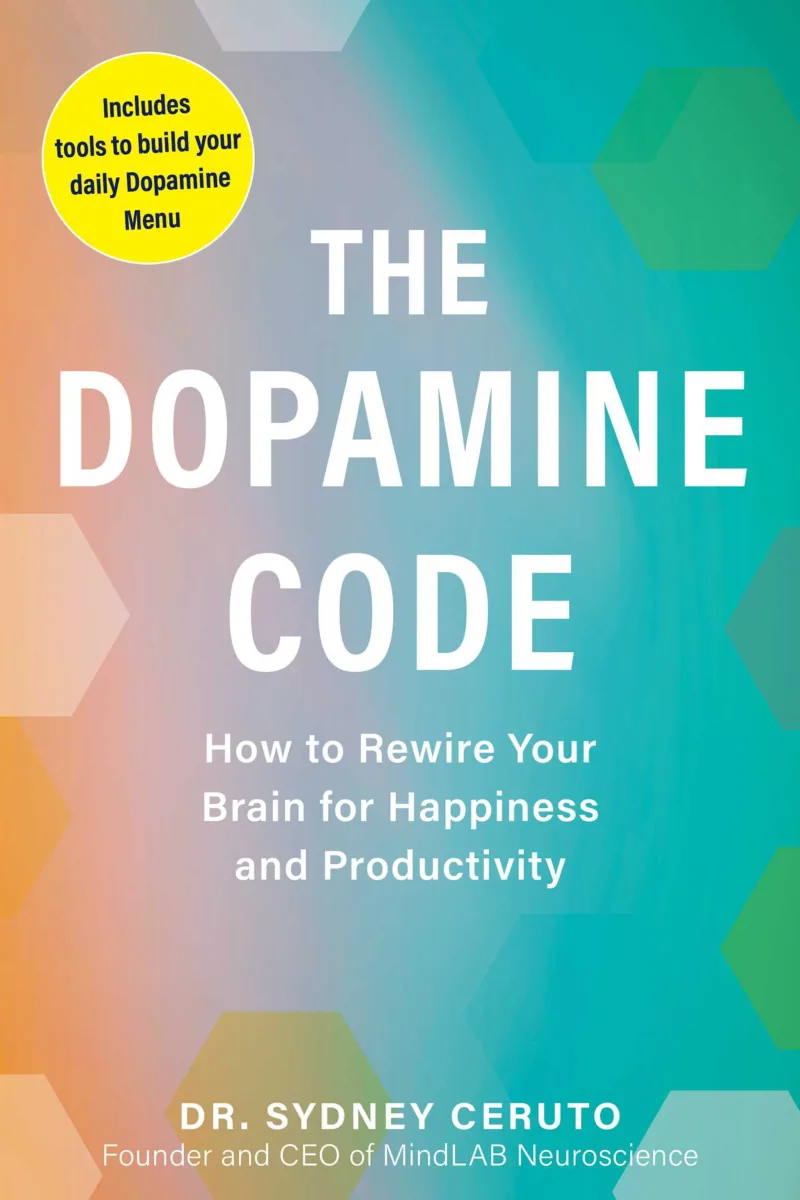
From The Dopamine Code
I wrote a book about exactly this: what dopamine actually is, the paradoxes it creates, and how to build a life that works with the system instead of against it. The myth-correction above is the opening move; the full framework for rebuilding motivation and contentment is what the book delivers. A short passage from the first chapter:
Popular culture loves to label dopamine as the “pleasure molecule,” yet science reveals a richer, more nuanced reality. Dopamine’s true role is found not simply in the thrill of reward, but in the dance of anticipation, striving, and imagining what could be. The surge of motivation that energizes you at the start of a new day, the focus that allows you to solve complex problems, and the curiosity that fuels ambition are all orchestrated by dopamine.
Dopamine doesn’t give contentment; it delivers possibility. It sets the stage for new challenges, frames future goals as attainable, and propels you to ask “What if?” about new opportunities, relationships, or aspirations. The anticipation of a meaningful conversation, the excitement for a fresh project, and even just the allure of a delicious meal are all sparked by dopamine’s drive for future reward.
Critically, dopamine rewards the process, not just the finished result. It’s what sharpens focus and fills ordinary moments with potential. Your brain, not designed for endless satisfaction, continually seeks out what’s next.
For the complete framework, see The Dopamine Code (Simon & Schuster, June 2026).
Frequently Asked
If dopamine isn’t pleasure, why does chasing things feel so good?
What feels good is the anticipation. Dopamine is the chemistry of the chase: the almost, the maybe, the lean-forward toward what might be next. The actual pleasure of having is briefer and runs on different circuitry, which is why the wanting so often outlasts and outweighs the liking. Understanding that the good feeling lives in the pursuit, not the prize, is the first step to designing a life that does not depend on the next bigger goal to function.
Is “dopamine fasting” completely useless, then?
The label is wrong: you cannot fast from a chemical your brain needs to stay alive. But the impulse behind it points at something real. A nervous system saturated with high-stimulus, high-frequency rewards raises its own threshold, so ordinary life starts to feel flat. Deliberately reducing that stimulation for a defined period lets the system resensitize. That is recalibration, not detox, and it is a structured practice rather than a one-day cleanse.
Is this established neuroscience, or Dr. Ceruto’s own theory?
The core mechanism is mainstream affective neuroscience. The wanting-versus-liking dissociation (Berridge), reward-prediction-error coding (Schultz), the effort functions of mesolimbic dopamine (Salamone), and the opponent-process basis of tolerance (Solomon and Corbit) are decades-deep, peer-reviewed literature. What is mine is the applied translation: how that correction changes the way someone navigates a drive that has gone quiet or a success that landed flat, refined across 26+ years of work. The science is well-mapped; the application is where the work lives.
Why do I feel flat or empty after finally achieving something I worked hard for?
Because the dopamine was in the pursuit, not the prize. Across a long climb, every step that beat expectation released the signal, and the wanting carried you forward. At the moment you actually arrive, the prediction the system was tracking is fulfilled, the gap between expected and actual closes to zero, and the chemistry that powered the chase simply goes quiet. The flatness is not a sign something is wrong with you. It is a predictable feature of how the wiring works, which is why a bigger next goal does not fix it.
If chasing the next goal isn’t the answer, how do I keep motivation from going quiet?
By working with what the system actually rewards instead of against it. The dopamine system pays out on anticipation and effort, the process rather than the finish line, so the move is to locate satisfaction inside the process instead of staking it on arrival. You protect the threshold rather than forever raising it with bigger hits, and you learn to savor the having on purpose, because the wanting will not do it for you. The same plasticity that trained the circuit toward the chase can retrain it toward a steadier baseline.
Why does ordinary life start to feel boring after a lot of high-stimulation reward like scrolling or constant notifications?
Because the reward system runs on balance, not volume. A nervous system soaked in high-intensity, always-available, frictionless rewards raises its own threshold for what registers as worth wanting, so ordinary effortful things start to feel flat by comparison. Underneath it is an opponent process: every spike is followed by a compensatory dip that deepens with repetition, so you need more to feel the same. The repair is not willpower but recalibration, a deliberate and structured reduction of high-stimulus input long enough for the system to resensitize.
References
- Schultz, W., Dayan, P., & Montague, P. R. (1997). A neural substrate of prediction and reward. Science, 275(5306), 1593–1599. https://doi.org/10.1126/science.275.5306.1593
- Berridge, K. C., & Robinson, T. E. (1998). What is the role of dopamine in reward: hedonic impact, reward learning, or incentive salience? Brain Research Reviews, 28(3), 309–369. https://doi.org/10.1016/S0165-0173(98)00019-8
- Berridge, K. C., & Kringelbach, M. L. (2015). Pleasure systems in the brain. Neuron, 86(3), 646–664. https://doi.org/10.1016/j.neuron.2015.02.018
- Salamone, J. D., & Correa, M. (2012). The mysterious motivational functions of mesolimbic dopamine. Neuron, 76(3), 470–485. https://doi.org/10.1016/j.neuron.2012.10.021
- Solomon, R. L., & Corbit, J. D. (1974). An opponent-process theory of motivation: I. Temporal dynamics of affect. Psychological Review, 81(2), 119–145. https://doi.org/10.1037/h0036128